What Is The Supreme Law Of The Land In The United States?
Learn the supreme law of the land in the United States and how the Constitution shapes every law. Clear, expert explanation for students and citizens.
Author:K. N.Nov 20, 20251K Shares144.4K Views
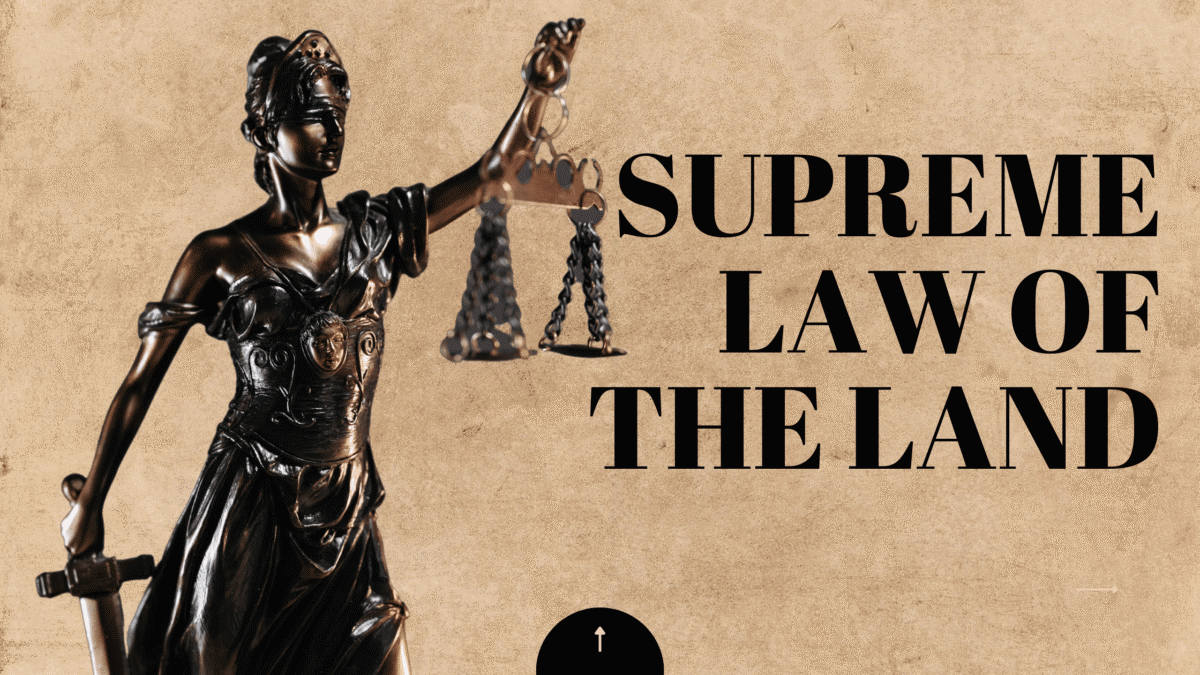
The Supreme Law of the Land: The Real Power Behind Every U.S. Rule
Understanding its meaning and its reach is essential for every citizen, lawyer, and student of democracy. Yet, many people overlook the practical implications of this supremacy, viewing it as a dusty concept rather than a living, breathing legal reality that shapes their daily lives.
Most people looking up the supreme law of the land in the United Statesreally want three things: a clear definition, an understanding of why it sits above every other law, and a sense of how that actually plays out in real life. This guide walks through all of that step by step, so you walk away with a solid, practical understanding of the Constitution’s supreme status.
The Definitive Answer: The U.S. Constitution And Its Purpose
"The supreme law of the land is the United States Constitution."
Drafted in 1787 and ratified in 1788, this foundational document established America's national government and fundamental laws, and guaranteed certain basic rights for its citizens. It is the oldest and longest-standing written and codified national constitution in force in the world, making its authority unparalleled.
What Does The Constitution Do?
The role of the Constitution goes far beyond merely establishing the legal hierarchy. Its central purpose, often summarized in its Preamble, is to:
- Establish a framework for government:It divides the federal government into three distinct branches-Legislative (Congress), Executive (President), and Judicial (Courts)-and defines their powers and limitations, embodying the principle of separation of powers.
- Define and limit power:It grants specific powers to the federal government while simultaneously reserving certain powers to the states and the people, establishing the system of federalism.
- Protect individual rights:Through its Articles and subsequent Amendments (like the Bill of Rights), it shields citizens from government overreach.
Continue Reading: The History Of Constitutional Law - Constitutional Law And Its Evolution
Why Supremacy Was Necessary: Superseding The Articles Of Confederation
To truly appreciate the supreme law of the land, one must understand what it replaced. The U.S. Constitution superseded the Articles of Confederation, the nation's first governing document, which proved critically ineffective.
The Failure Of The First Constitution
The Articles of Confederation provided little real power to the central government. The Confederation Congress lacked the authority to enforce laws effectively, had no credit or taxing power, and struggled to finance the government or the army.
- Crisis Point:Domestic unrest, notably Shays' Rebellion (1786–1787), highlighted the central government's inability to maintain order or financially support endangered states.
- The Goal:The 1787 Constitutional Convention was called to create a federal constitution adequate to the exigencies of government and the preservation of the Union, replacing the weak structure with a strong, definitive, and supreme legal authority.
The Crucial Source Of Supremacy: What Does The Constitution Say?
The reason the Constitution holds this ultimate authority is explicitly laid out within its text, specifically in Article VI, Clause 2. This is one of the most vital, yet often least understood, sections for establishing the legal hierarchy.
"This Constitution, and the Laws of the United States which shall be made in Pursuance thereof; and all Treaties made, or which shall be made, under the Authority of the United States, shall be the supreme Law of the Land..."
This potent declaration is known as the Supremacy Clause, and it dictates the legal order, clarifying what the Constitution says is the supreme law.
The Constitution Is The Supreme Law Of The Land: Meaning
The core meaning of the Supremacy Clause establishes a clear order that resolves legal conflicts:
- Constitutional Primacy:The U.S. Constitution itself stands at the very top. Any law-federal, state, or local-that contradicts it is unconstitutional and void.
- Valid Federal Authority:Federal laws passed by the U.S. Congress and international treaties ratified by the U.S. government hold the next level of authority, but onlyif they are consistent with the Constitution (i.e., "made in Pursuance thereof").
- State Law Subordination:State constitutions and state/local laws must yield to the valid exercise of federal authority and the U.S. Constitution.
This clause ensures that while the nation is composed of 50 sovereign states, there is a single, overriding legal authority-the document agreed upon by all-to ensure national unity and consistency.
Constitutional Supremacy In Action: Federalism And Judicial Review
The theoretical supremacy of the Constitution is given practical force through two critical concepts: Federalism and Judicial Review. Without these, the title "supreme law" would be merely aspirational.
The Hierarchy And What The Supreme Law Of The Land Does
The practical effect of the supreme law of the land is the imposition of a legal hierarchy. What does the supreme law of the land do? It provides the ultimate measuring stick for the legality of all other governmental actions and statutes.
- Federal Authority:It allows the federal government to operate within its defined powers (e.g., regulating interstate commerce, declaring war) without obstruction from individual states.
- Uniformity:It ensures that citizens' fundamental rights, such as freedom of speech or due process, are applied uniformly across all 50 states, preventing a state from overriding these core national protections.
Related Reading: Constitutional Law Origins And Modern Development
The Role Of Judicial Review And Declaring Laws Unconstitutional
The mechanism that enforcesthis hierarchy is Judicial Review. The U.S. Supreme Court, in its role as the final interpreter of the supreme law, has the power to strike down federal or state laws found to be incompatible with the Constitution.
Enforcement:This power, established in Marbury v. Madison(1803), is the essential check that prevents legislative bodies or the executive branch from exceeding their constitutional limits. When people believe a law does not follow the Constitution, they can eventually take their case to the Supreme Court. The Court then decides if the law is unconstitutional. If the Supreme Court decides a law is unconstitutional, that law can no longer be enforced. Everyone must follow the Constitution; this is the ultimate function of the judicial branch in upholding the supremacy of the foundational document.
The Philosophical Roots Of The Supreme Law
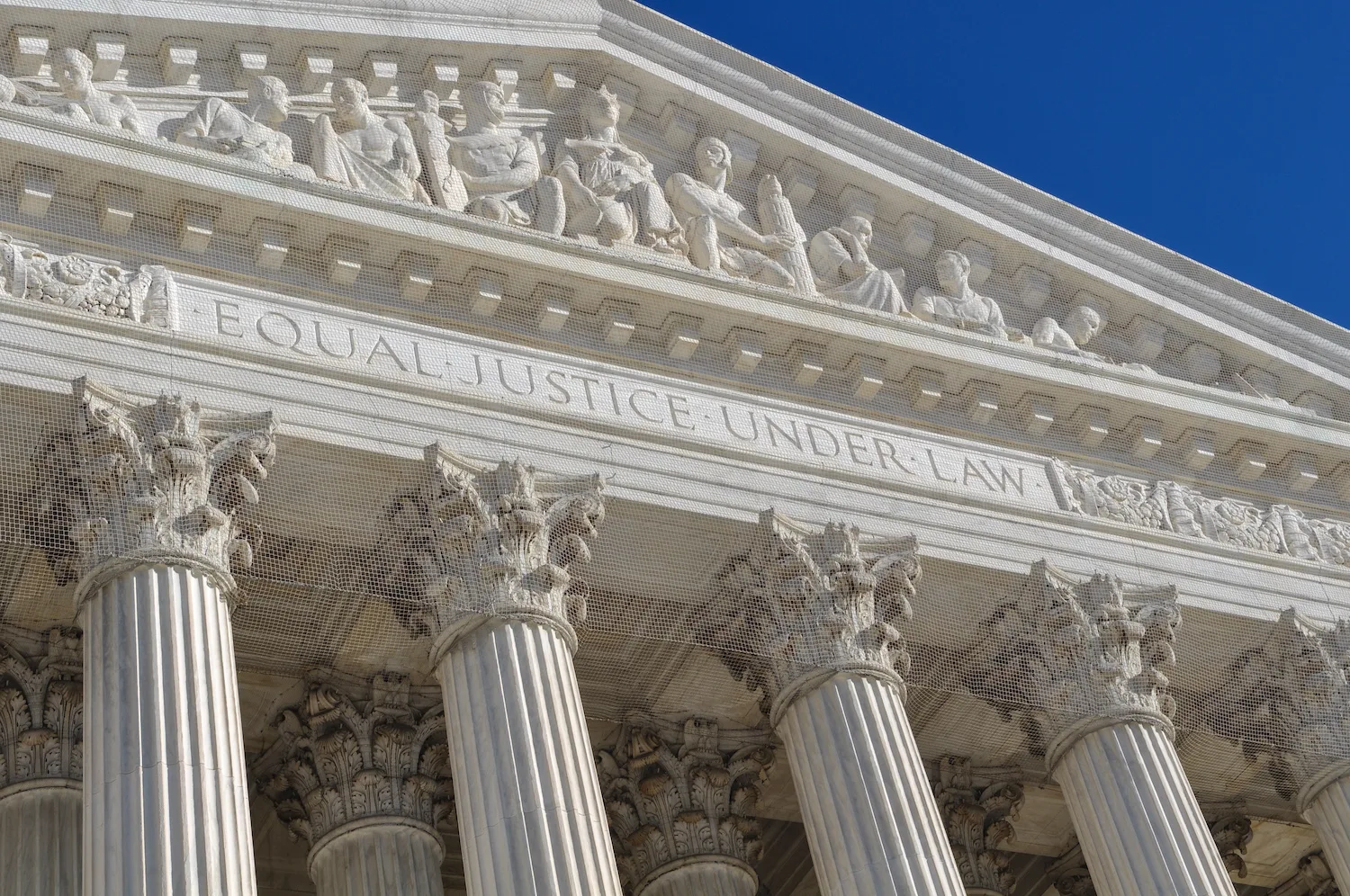
The principles embedded in the Constitution were heavily influenced by the Enlightenment philosophers, demonstrating a deeper, theoretical basis for its structure and authority.
Separation Of Powers And Checks And Balances
The structure of the government into three distinct branches-Legislative, Executive, and Judicial-is rooted in theory.
- Montesquieu:The French philosopher Montesquieuwas instrumental in emphasizing the need for separation of state powers to protect the people's liberty. This influence is evident in James Madison's writings in The Federalist Papers.
- Locke's Consent:The core concept of consent of the governed and the purpose of government being to protect individual rights (life, liberty, and property) comes largely from John Locke. The Constitution translates these philosophical ideals into an enforceable legal framework.
The Scope Of The Supreme Law: The Bill Of Rights And Amendments
The breadth of the supreme law includes not just the original text, but also all subsequent formal changes. This leads to common user questions regarding the status of the amendments.
Are The Amendments The Supreme Law Of The Land?
Yes. The Amendments-including the first ten known as the Bill of Rights-are integral and fully ratified parts of the U.S. Constitution. They are not separate but extensions, modifications, and clarifications of the original document.
What is an amendment?An amendment is a formal change or addition to the text of the Constitution, adopted through the rigorous process outlined in Article V. Once ratified, an amendment has the exact same legal authorityas any part of the original 1787 text. Therefore, declaring a law unconstitutional can be based just as easily on the First Amendment as on Article I.
Is The Bill Of Rights The Supreme Law Of The Land?
The Bill of Rights is the common name for the first ten amendments. Because all amendments are fully integrated parts of the Constitution, the Bill of Rights is, by extension, part of the supreme law. It is arguably the most cited portion of the Constitution, as it specifically protects individual freedoms from government infringement.
FAQs About The Supreme Law Of The Land
What Was The Supreme Law Of The Land In The United States Written In 1787?
The document written in 1787 was the U.S. Constitution. While it was signed that year, it became the legally binding supreme law of the land upon its ratification in 1788 and subsequent implementation in 1789, replacing the previous governing structure under the Articles of Confederation.
What Is Known As The Supreme Law Of The Land?
The United States Constitution is known as the supreme law of the land. This includes the main body of the text (the Preamble and seven Articles) and all 27 Amendments that have been formally ratified.
What Is The Supreme Law Of The Land In The United States: The U.S. Supreme Court, The U.S. Constitution, Acts Of Congress And Treaties, State Laws, Statutes?
The definitive supreme law is the U.S. Constitution. Acts of Congress (statutes) and treaties are also considered supreme ifthey are made in accordance with the Constitution, but they are subordinate to the Constitution itself. The U.S. Supreme Court is the ultimate interpreterand enforcerof the supreme law, but it is not the law itself. State Laws and Statutes are subordinate to all valid federal authority.
How Does The Constitution Affect State Constitutions?
The U.S. Constitution is superior to state constitutions. A state's constitution may not contain provisions that contradict the U.S. Constitution. For example, a state constitution cannot grant the state government powers that are explicitly denied to it by the U.S. Constitution.
How Can I View The Official Text Of The U.S. Constitution?
The official text is widely available and often reproduced in digital formats. Searching for "U.S. Constitution PDF" will yield reliable versions, often hosted on government and educational websites such as the National Archives.
Key Takeaways
- The United States Constitution is the undisputed supreme law of the land.
- Its authority is mandated by the Supremacy Clause (Article VI, Clause 2).
- The Constitution superseded the weak Articles of Confederation to create a functional national government.
- The Constitution's supremacy is enforced by the U.S. Supreme Court through the mechanism of Judicial Review.
- All federal laws must be "made in Pursuance thereof" (consistent with the Constitution) to be valid.
Final Thoughts
The supreme law of the land is more than a historical artifact; it is the enduring foundation of American governance and the ultimate guarantor of individual liberty. The Constitution provides the structure, grants the power, and most critically, establishes the boundaries of every governing authority in the nation. By understanding the simple truth-that every law, from a traffic ordinance to a Congressional statute, must ultimately pass Constitutional muster-you gain a critical lens through which to view American legal and political life. This document is a profound pact between the government and the governed, and its supremacy is what keeps the rule of law, rather than the rule of men, alive.
If you found this exploration of Constitutional Supremacy insightful, please share it on your social media to help others understand the true foundation of American law.
Jump to
The Supreme Law of the Land: The Real Power Behind Every U.S. Rule
The Definitive Answer: The U.S. Constitution And Its Purpose
Why Supremacy Was Necessary: Superseding The Articles Of Confederation
The Crucial Source Of Supremacy: What Does The Constitution Say?
Constitutional Supremacy In Action: Federalism And Judicial Review
The Philosophical Roots Of The Supreme Law
The Scope Of The Supreme Law: The Bill Of Rights And Amendments
FAQs About The Supreme Law Of The Land
Key Takeaways
Final Thoughts

K. N.
Author
Latest Articles
Popular Articles