State Of Texas Tint Laws | Check If Your Window Tint Is Legal
Learn the Texas tint laws before you tint or get ticketed: limits by window, exemptions, fines and how HB 3297 changed enforcement in Texas.
Author:K. N.Nov 19, 202531.3K Shares539.9K Views
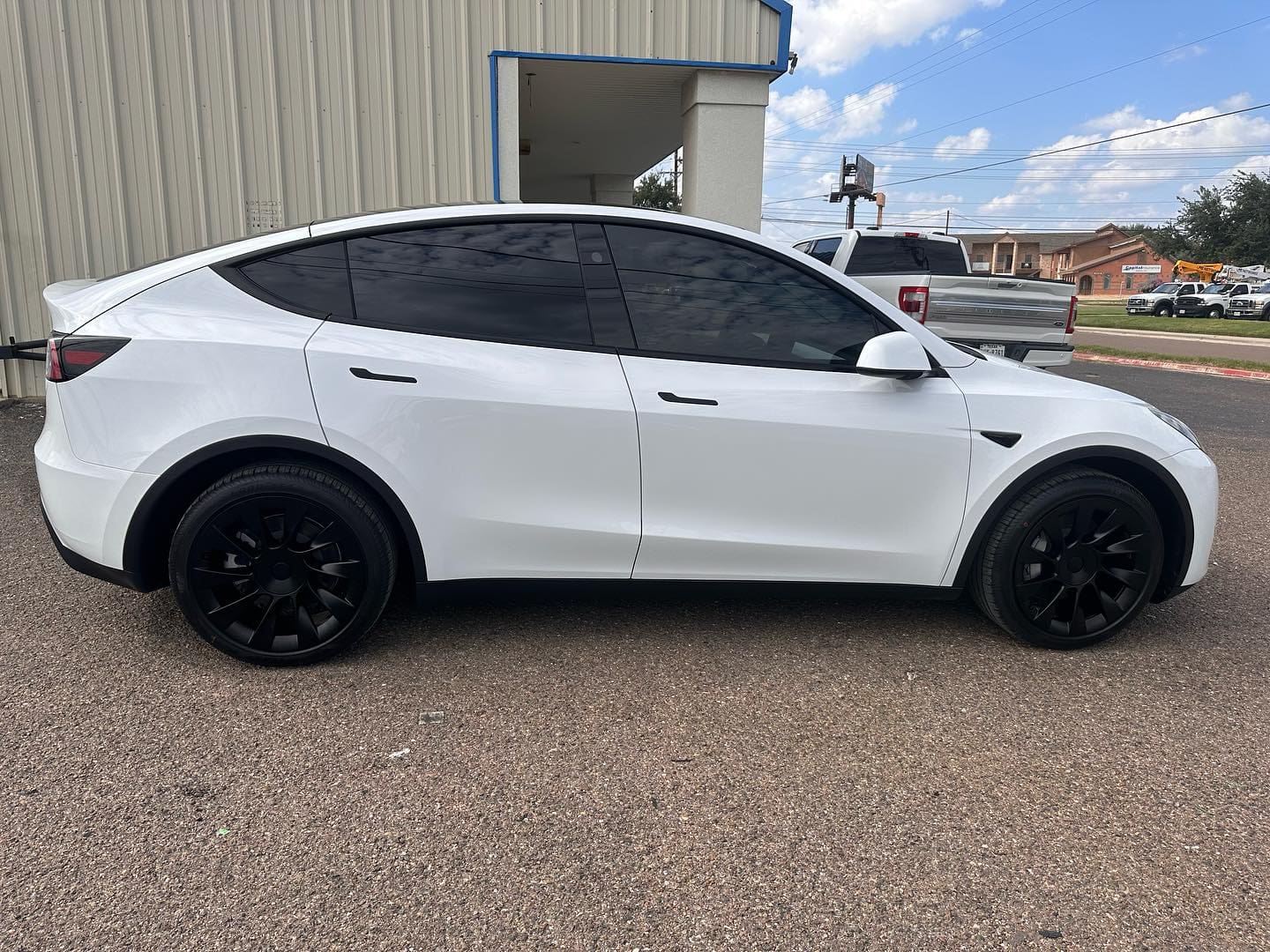
Don’t Let Your Tint Be The Reason You Get Pulled Over
If you drive in Texas, window tint is more than just a style choice-it helps protect you from the heat. But if your tint is too dark or installed incorrectly, you can end up with tickets, failed inspections, and issues renewing your registration.
Most people looking up Texas tint lawsare really trying to answer one question: “Can I tint my windows the way I want and still avoid legal trouble?”
This guide covers the current 2025 rules, how the laws are enforced, medical exemptions, legal tint percentages for each window, and practical tips to help you choose a tint that keeps you comfortable and compliant.
VLT, AS-1, Reflectivity: The Three Concepts That Unlock The Law
Visible Light Transmission (VLT)
VLTis the percentage of visible light that passes through your windows after tint is installed.
- Higher percentage = lighter shade.
- Lower percentage = darker shade.
Examples:
- 70% → quite light.
- 35% → medium-dark, still easy to see through.
- 20% → noticeably dark.
- ~5% → “limo” look.
Texas rules talk about the combination of factory glass + film, which is why good 2025 guides keep stressing that you must consider net VLT- not just the number on the film box.
The AS-1 Line And The “top Five Inches”
Most windshields have a small AS-1 markfrom the factory. Legally, that mark defines the area where a tinted strip at the top can end. Current explanations in both legal and tint-industry resources agree that:
- If the AS-1 mark exists, tint must stay above that line.
- If there’s no visible mark, the strip can extend no more than five inches downfrom the top edge.
- Texas uses whichever of those boundaries is closer to the roof.
- Within that band, VLT must remain at or above the legal threshold, and colors like red, blue, and amber are off-limits.
Reflectivity: Why Mirror-like Films Are A Problem
Tinting film sometimes includes metallic elements that reflect lightto cut glare and heat. Texas allows some reflectivity but limits it:
- Front side windows:no more than about 25% reflective.
- Rear side windows:same 25% reflectivity ceiling.
Anything approaching a chrome or mirror finish is risky; standard ceramic or carbon films that look like normal glass are usually fine.
Legal Tint Limits By Window And Vehicle Type (2025)
Passenger Cars (sedans, Coupes, Hatchbacks)
Windshield
- Tint allowed only above the AS-1 line, or within top 5 inchesif no mark, whichever is closer to the roof line.
- Must let around 25% or more of visible light throughin that strip and stay within the reflectivity cap.
- No red, blue, or amberfilm on the shield.
Front side windows
- Must allow at least about 25% VLT(glass + film together).
- Reflectivity must not exceed roughly 25%.
Back side windows
Texas rules allow very dark filmhere; there is no specific minimum VLTstated for the rear side windows on passenger cars in DPS’s after-market standard, as long as reflectivity stays in range and your view isn’t obstructed.
Rear window (back glass)
- Can be virtually any darknessif your car has functional outside mirrors on both sidesshowing at least about 200 feetbehind the vehicle.
- Without both mirrors, the transparent portion used for rear visibility must stay closer to the 25%-level clarity.
SUVs, Trucks, Vans And Other Multi-purpose Vehicles
For the front of the vehicle, the rules are the sameas for sedans:
- Front side glass must allow about 25% or moreof light through.
- A top windshield strip only, above AS-1 / 5-inch rule, with color and reflectivity limits.
For the back and cargo area, 2025 guides confirm:
- Rear side windows can be as dark as you like.
- The rear window can also be very dark, again assuming dual side mirrors.
This is why many SUVs come with factory privacy glasson the rear doors and cargo area - it’s legal when you have external mirrors.
Extra Rules People Forget: Mirrors, Labels, And Certified Film
Short, checklist-style sites highlight a few details that often get missed:
- Mirrors: If the back glass is dark enough to limit visibility, Texas expects outside mirrors on both sides of the vehicle.
- Certified film only: Manufacturers must certify any tint film sold for use in Texas, and installers are expected to use these certified products exclusively.
- Mandatory label on the driver’s window: DPS requires that each vehicle have one tint label placed in the rearmost bottom corner of the driver’s side window. This sticker identifies the film used and confirms that it meets Texas requirements.
- Medical exemptions: Allowed, but require proper documentation and do not free you from every single rule (especially on windshield visibility).
Ignoring these “small” requirements is one way to fail inspectioneven if your tint shade itself is legal.
Medical Tint Exemptions In Texas (Who Qualifies & How It Works)
Several up-to-date legal resources and firm guides line up on this: Texas does allow darker tintfor people with certain health issues that make sun exposure harmful.
Typical Qualifying Conditions
Examples of conditions commonly referenced as qualifying:
- Lupus and similar autoimmune disorders
- Albinism and other pigment disorders
- Porphyria
- Severe burns or extensive scarring
- Skin cancer or high-risk precancerous lesions
- Light-sensitivity disorders or photosensitivity linked to medications
The common thread is clinically significant sensitivity to sunlightwhere extra shade meaningfully reduces health risk.
Requirements For A Valid Exemption
Generally, you must:
- Obtain a signed statementfrom a licensed physician or optometrist / ophthalmologist describing the condition and need for reduced light exposure.
- Follow DPS procedures, which can include submitting the formto the appropriate DPS division.
- Keep a copy of the exemption documentation in the vehicleat all times.
With a proper exemption, you may be allowed:
- Darker film on front side windows.
- Additional protection on the windshield (often in the form of clear or very light film that blocks UV without drastically reducing visibility).
But even then, safety and visibility still matter- the state could still take issue with a windshield so dark it affects safe driving.
Enforcement Reality: Stops, Fines & Inspections
On paper, the law is simple. On the road, what matters is how it’s actually enforced.
How Police Check Your Tint
Current legal explainers and 2025 tint guides all describe the same process:
- Any Texas officer can stop a vehicle solely for suspected illegal tint.
- They use VLT metersthat clamp over the glass edge and read the combined light transmission.
- If your front windows test under the required threshold, it’s an easy citation.
Highly mirrored or obviously dark glass on the front doors is basically a rolling invitation to get checked.
Fine Ranges And “fix-it” Tickets
- A first violation commonly leads to fines that can run from roughly $20 up to around $200, depending on the court and specifics.
- Some jurisdictions set upper bounds around $250–$275or more when fees are included.
- Media reports quote some law enforcement sources mentioning potential fines reaching up to near $1,000for repeated issues and stacked violations, though that’s not typical for a first ticket.
Many citations are written as “fix-it” tickets:
- You’re required to remove or replacethe film.
- Once you show proof of correction, the fine may be reduced or dismissed - but you still pay for film removal + reinstalland any court costs.
Annual Safety Inspection: Where Illegal Tint Really Hurts
Until January 1, 2025, most Texas drivers had an annual safety inspection that could catch illegal tint before it became a traffic stop issue. House Bill 3297ended that safety inspection requirement for non-commercial vehicles and replaced it with a small “inspection program replacement fee” paid at registration instead.
For most everyday drivers, that means your tint is no longer checked when you renew your registration. Now, illegal film is usually discovered during a traffic stop or, in certain counties, when your vehicle goes through emissions testing. Commercial vehicles and cars in emissions counties can still have tint flagged during those inspections, and you may be required to fix it to be fully compliant.
For most non-commercial vehicles, the days of a yearly inspection catching bad tint are over, which makes it more important to get your tint legal from the start-you’re most likely to find out it’s a problem when you see flashing lights, not when you renew your tags.
Real-World Scenarios: Is Your Current (or Planned) Tint Legal?
You Already Have Tint But Aren’t Sure It’s Compliant
Quick self-audit:
- Look for the compliance stickeron the driver’s window, usually low in a corner between film and glass.
- Check any paperwork from your installer for the listed VLT levelon each window.
- Remember that many cars already come with slightly tinted glass- adding a 25-ish percent film on top can drop the net VLT below the legal floor.
- If in doubt, visit a tint shop or inspection station and ask them to meter your windows.
If the front doors test under the legal line, don’t assume “close enough” will save you - meter variance and different enforcement attitudes mean being under 25% is always a risk.
You’re Planning A New Tint Job In Texas
Here’s a simple decision checklist:
- How much night driving do you do?
- How much legal risk are you okay with?
- Do you care about long-term convenience?
Choosing a 30–35 percent film on the front and a darker shade in the rear is usually the sweet spot for Texas drivers: good sun and privacy performance, low enforcement risk, and decent night visibility.
You Moved To Texas With Tint From Another State
National tint charts make it clear that front-window limits vary a lot between states. Some require very light fronts (around 70%); others allow 20–25%.
- While you’re still on out-of-state plates, officers sometimes give more leeway, but they can still cite obvious violations.
- Once you register in Texasand need a Texas inspection, your car must meet Texas standards- especially the ~25% minimum on the front doors and the windshield strip rule.
If your previous state allowed darker fronts, it’s wise to meter your glass and adjust beforeyour first Texas inspection.
You’re Seeking A Medical Tint Allowance
If sun exposure significantly worsens your condition:
- Talk to your doctor or eye-care specialistabout whether reduced light exposure in vehicles is medically recommended.
- Obtain a signed statementthat explicitly says you require reduced light in the vehicle.
- Follow DPS instructions for submitting that documentationif required.
- Work with an installer familiar with medical-level tintingin Texas, so they don’t just make the car dark but also ensure visibility remains reasonable and your paperwork is in order.
Always keep your exemption documents in the car; without them, officers will treat dark front glass as a regular violation.
Choosing Specific Percentages: 20, 25, 30, 35 & 5
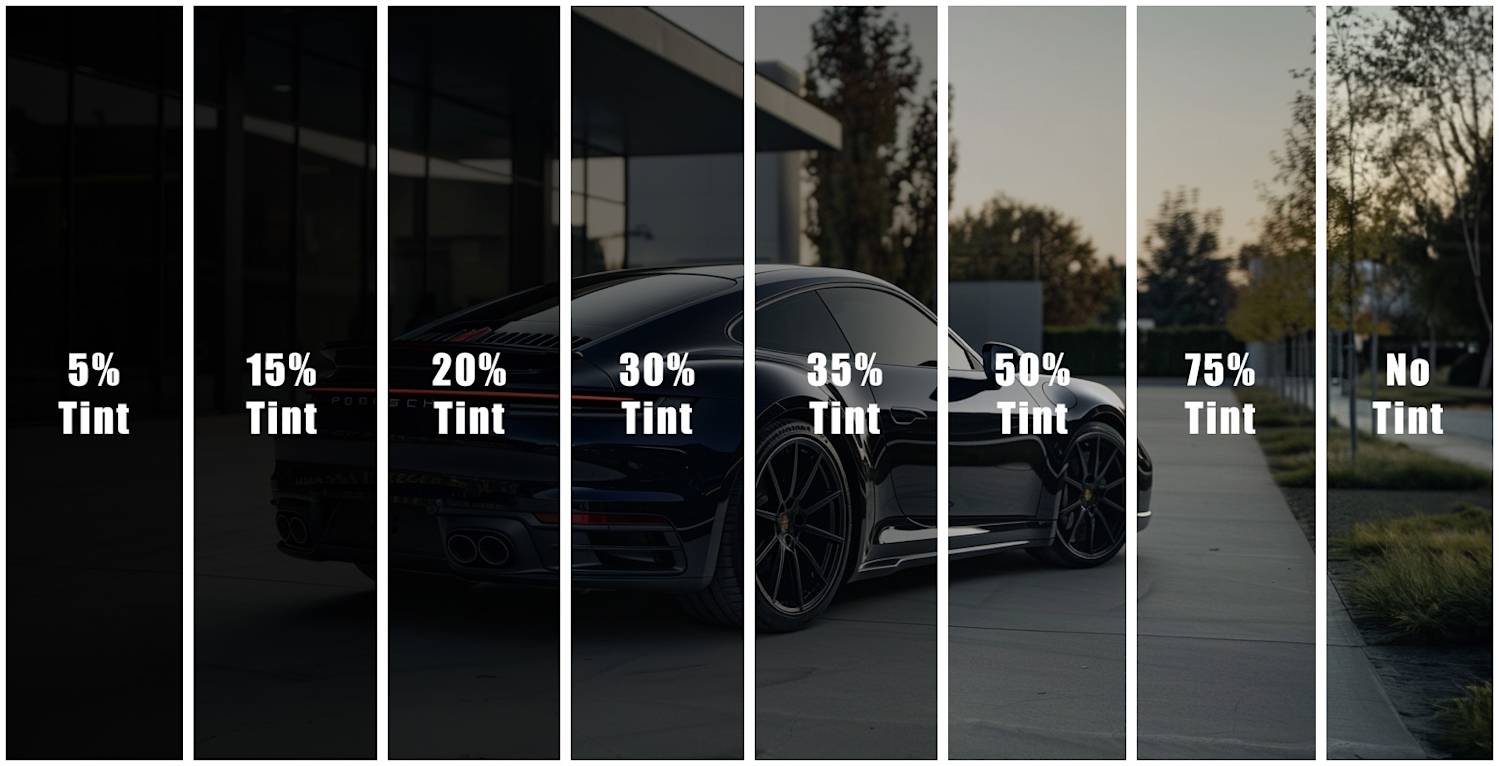
Now for the questions people actually type into Google.
Is A 20-percent Shade Safe On The Front Windows?
From a legal standpoint, a twenty-percent film on the front doors is belowwhat Texas expects; those windows are supposed to allow around a quarter of light through. Because 20% is clearly darker than that, it:
- Is likely to fail a VLT meter test.
- Commonly triggers traffic stops, especially at night or in urban areas.
- Can easily cause inspection failures.
So, practically, 20% on the front in Texas is asking for trouble.
What About A 25-ish Percent Film On The Front Doors?
Most official and semi-official summaries phrase the rule as “must allow more than 25% of light in,” or “at least 25% VLT”.
- In theory, a true 25-percent net VLT is compliant.
- In practice, factory glass may already be slightly tinted, and tint films aren’t perfect; a labeled “25%” film on tinted glass can yield a net reading underthe limit.
If you want to be safe, choose a slightly lighter film (say, low-30s) on the front doors, especially if your car didn’t come with pure-clear glass.
Is A Thirty-percent Shade A Good Idea For Texas Fronts?
Many 2025 guides and tint shops treat a thirty-percent film on the front doors as the practical sweet spot:
- Still visibly tinted and effective against heat and glare.
- Safer buffer above the legal minimum, so inspection and enforcement risk drops.
- Easier night visibility than ultra-dark films.
So if you’re wondering “Is a front tint somewhere in the low-30s okay?”, the answer is yes, usually, as long as you’re using quality film and your factory glass isn’t unusually dark to start with.
Can You Legally Run Five-percent “limo Tint” Anywhere?
You cannot legally use five-percent film on the front doors or across the whole windshield. However, Texas is very lenient on the rear side windows and back glass, especially on SUVs and trucks:
On rear doors and the back glass, extremely dark film is allowed so long as:
- You’ve got dual side mirrors providing a rear view.
- Reflectivity and color rules are respected.
That’s why you see so many vehicles with lighter front glass and deeply shaded rear windows - it’s the classic legal configuration here.
Which Is Darker: 20% Or 35% (and Which Is Smarter)?
VLT is a simple scale: the lower the number, the darker the glass.
- 20% is noticeably darker, great for privacy but riskier for night driving and legality.
- 35% is more forgiving at night and usually more comfortable on rural or unlit roads.
For most Texas drivers, especially those who drive at night a lot, a mid-30s shade on the front is a smart compromise between comfort and safety.
FAQs About Texas Window Tint Rules
What Is The Darkest Shade Allowed On The Front Doors In Texas?
On a normal passenger vehicle, the front side windows must let at least about 25% of visible light through. That is essentially the darkest shade that is considered legal on those windows.
Can I Be Stopped Just Because My Windows Look Too Dark?
Yes, you can. Texas law allows officers to pull you over if they think your tint might be illegal. They can then use a tint meter to measure how much light passes through your glass. If the reading is below the legal limit, they can issue a ticket.
Do Illegal Windows Always Fail The Annual Inspection?
They often do. If your front windows are too dark, the windshield strip is too deep or the wrong color, the tint is overly reflective, or the required sticker is missing, your car can fail inspection for tint alone, and you can’t renew registration until it’s fixed.
Are Ceramic And Carbon Films Legal In Texas?
Yes. The law only cares about light transmission, reflectivity, and color, not film type, and many drivers choose ceramic because it blocks more heat and UV at the same darkness level than basic dyed film.
Do Factory Privacy Windows Count Toward The Tint Limit?
Yes. The legal light level is measured on the glass and any added film together, so stacking tint on already-dark factory privacy glass can be fine on rear windows with mirrors but illegal on the front doors.
Which Vehicles Don’t Have To Follow The Usual Tint Limits?
Exempt vehicles include law-enforcement cars, certain commercial passenger vehicles like limos, taxis, and some buses, and vehicles used for or owned by someone with a valid medical tint exemption; regular personal vehicles must follow the standard rules.
How Much Can I Expect To Pay If I Get A Tint Ticket?
A first tint ticket is typically anywhere from a few dozen dollars up to a bit over $200, with repeat offenses and court costs increasing the total, and “fix-it” tickets still leaving you to pay for removing and replacing the illegal film.
Do I Need To Carry My Medical Exemption Paperwork With Me?
Yes, you should. If your vehicle has darker-than-normal tint on windows that usually need to meet the standard limit, officers and inspectors will expect to see proof of your medical exemption. If you cannot show that paperwork when asked, they will treat the tint as illegal, just like any other violation.
Conclusion
The goal is to stay cool and protected from the sun without running into tickets or inspection trouble. Keep your front windows within the legal limit and, if possible, choose a slightly lighter shade in the low 30% range, especially if the glass already has factory tint.
Follow the windshield rule by only tinting a narrow strip at the top (above the AS-1 line or within the top five inches) and avoiding colors like red, blue, or amber. In the rear, you can use darker tint on the back doors and rear window, particularly if you have side mirrors that give a clear view behind.
Choose a reputable tint shop that uses film certified for Texas, applies the required label on the driver’s window, and understands state rules. If you have a light-sensitive medical condition, complete the exemption process properly and keep your paperwork in the car.
Done right, your tint will give you less glare, a cooler cabin, and more privacy-without turning into a yearly problem at inspection or registration time.
Jump to
Don’t Let Your Tint Be The Reason You Get Pulled Over
VLT, AS-1, Reflectivity: The Three Concepts That Unlock The Law
Legal Tint Limits By Window And Vehicle Type (2025)
Extra Rules People Forget: Mirrors, Labels, And Certified Film
Medical Tint Exemptions In Texas (Who Qualifies & How It Works)
Enforcement Reality: Stops, Fines & Inspections
Real-World Scenarios: Is Your Current (or Planned) Tint Legal?
Choosing Specific Percentages: 20, 25, 30, 35 & 5
FAQs About Texas Window Tint Rules
Conclusion

K. N.
Author
Latest Articles
Popular Articles