Trump Martial Law: Insurrection Act Vs. Reality
Legal analysis of Trump Martial Law threats. The Insurrection Act is not martial law. Understand the UCMJ, Milligan precedent, and judicial limits on presidential power.
Author:K. N.Nov 11, 202559.9K Shares868.1K Views
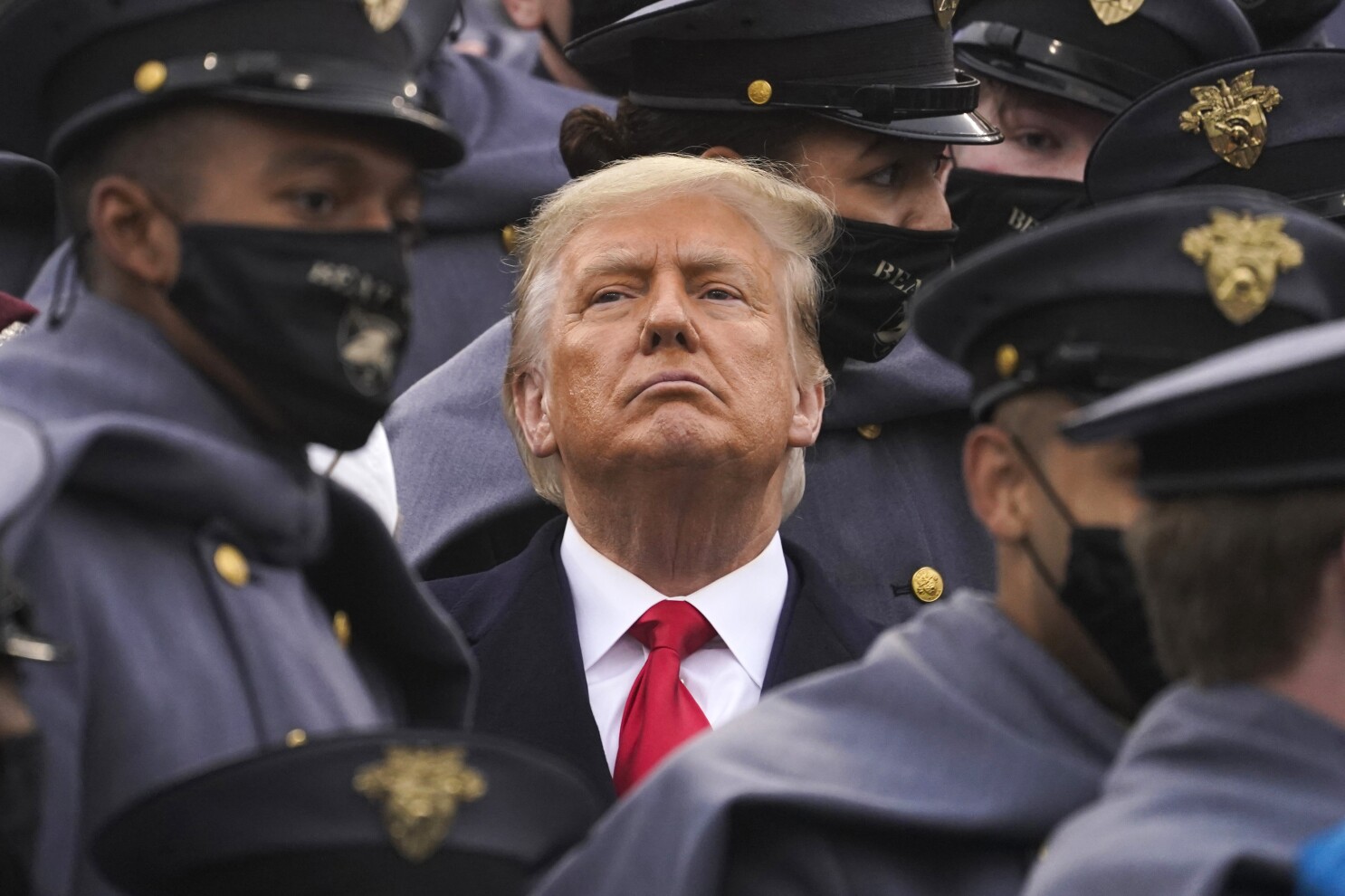
Unmasking Executive Power: Fact Vs. Fear
The discussion of "Trump martial law" concerns the limits of presidential power. This analysis separates formal military rule from the highly constrained deployment of force under the Insurrection Act of 1807. Understanding these legal distinctions is critical to assessing safeguards protecting American democracy.
Martial Law Vs. Insurrection Act
Confusion exists over what constitutes military intervention in civilian affairs.
1. Formal Martial Law: Military Governance
Martial law is the total, temporary replacement of civil government by military authority.
- Definition:Military personnel assume executive, legislative, and judicial powers; civilian courts are suspended.
- Supreme Court Precedent:The Supreme Court precedent, primarily Ex parte Milligan(1866), established that military rule cannot exist where civil courts are open and functioning. The U.S. President has no clear constitutional or statutory authority to declare nationwide martial law.
2. The Insurrection Act: Military Aid To Civil Authority
The Insurrection Act of 1807 (Title 10, U.S. Code) is the legal basis for domestic deployment of federal troops, but it is not martial law.
- Posse Comitatus Exception:It creates the exception to the Posse Comitatus Actof 1878, which otherwise prohibits federal military involvement in domestic law enforcement.
- Role:The military aids civil authority in suppressing insurrection or enforcing federal law. The civilian legal system remains active; troops enforce civilian law.
- Presidential Discretion:The Act grants the President unilateral power to determine when "unlawful obstructions... or rebellion" (10 U.S.C. $ 252) necessitate the use of armed forces, even over state objections.
Historical Usage
The Insurrection Act has been invoked over 30 times. Examples:
- George H.W. Bush (1992, Los Angeles riots).
- Dwight D. Eisenhower (1957, enforcing school desegregation in Little Rock).
- Abraham Lincoln (Civil War).
Related Reading: The Future Of Law
Legal Conflict: Power Claims And Judicial Checks
The debate centers on claims of unlimited power versus institutional resistance.
Claim Of Plenary Authority
Trump's Rationale: President Trump explicitly linked Insurrection Act use to overcoming institutional checks, stating he would deploy troops if "courts were holding us up, or governors or mayors were holding us up." This interpretation of "unquestioned power" to suspend court cases is unconstitutional.
Judicial Challenges (Title 10)
Deployments are subject to immediate legal review. The administration has frequently used 10 U.S.C. $12406 to federalize the National Guard:
- Lawsuits:States like Oregon and Illinois challenged the federalization of their National Guard without gubernatorial consent for domestic missions.
- Rulings:Federal judges have issued injunctions against deployments, finding the administration failed to meet the statutory requirement of showing a genuine inability to execute laws. This confirms that all Title 10 deployments are justiciable.
Risk: "Slow-Motion Martial Law"
The more feasible threat is the gradual accumulation of power, creating a "slow-motion martial law" environment without a formal declaration.
Method:Using federalized forces ($12406) or active-duty troops (Insurrection Act) for missions-like mass deportations or suppressing non-violent protest-that substitute military presence for standard law enforcement, effectively unconstitutionally suppressing the freedoms of speech and assembly.
Also Check Out: The Role Of Law In Promoting Social Justice
Three Walls Against Overreach
The U.S. constitutional system prevents excessive power concentration.
1. The Professional Barrier: The Military's Oath
Service members swear an oath to the Constitution, not a person.
- Duty to Disobey:The Uniform Code of Military Justice (UCMJ)mandates that service members disobey any manifestly unlawful order. An order is unlawful if it is "contrary to the Constitution, the laws of the United States," or beyond the issuer's authority (UCMJ Article 92).
- Consequence:A clearly unconstitutional order (e.g., ordering war crimes or dissolution of Congress) would legally obligate senior officers to refuse and likely lead to mass command resistance.
2. The Judicial Barrier: Habeas Corpus
- Habeas Corpus:Federal courts are immediately available to review the legality of any detention. Any attempt at mass detention without charge would be met with swift injunctions, enforcing habeas corpus-the protection against unlawful imprisonment.
- Constitutional Rights:The Fourth Amendment and other rights remain in full force. Troops deployed under the Insurrection Act cannot conduct warrantless searches or arrests outside the scope of law enforcement assistance.
3. The Legislative Barrier: Funding And Oversight
- Power of the Purse:Congress controls federal and military funding. It can withhold budget allocations or pass legislation to amend the Insurrection Act to narrow the President's discretion.
- Impeachment:Congress retains the power of impeachment for constitutional violations.
Related Reading: Constitutional Law Origins And Modern Development
Frequently Asked Questions (FAQs)
Which President Used Martial Law?
While many Presidents approved limited martial law (Lincoln during the Civil War, Roosevelt in Hawaii post-Pearl Harbor), the power is overwhelmingly used by state governors. Due to the Milligan standard, no U.S. President has successfully imposed formal, widespread martial law that suspended the civil courts.
Why Is Trump Deploying The National Guard Controversial?
The controversy stems from deploying federalized National Guard troops-often under 10 U.S.C. $12406-to Democratic-led cities over the objection of state governors for missions like immigration enforcement or quelling protests, which critics argue is a political, rather than genuine law enforcement, action.
What Are My Rights During Martial Law Or An Insurrection Act Deployment?
Under the Insurrection Act, your core constitutional rights remain intact. The military is enforcing civilian law, not military law. Formal martial law is a different matter, but the Supreme Court has ruled that civilians cannot be tried by military tribunals as long as civil courts are functioning.
Did Donald Trump Ever Do Any Military Service?
Donald Trump did not serve in the U.S. military. He received multiple student deferments during the Vietnam War era and a medical deferment for bone spurs.
How Many Times Has The Insurrection Act Been Used?
The Insurrection Act has been formally invoked over 30 times throughout U.S. history, for diverse purposes ranging from post-Civil War Reconstruction to quelling riots in 1992.
Conclusion
The notion of martial law is legally blocked by the Ex parte Milliganprecedent; military rule cannot replace functioning civil courts. The real threat is "slow-motion martial law," where the vague Insurrection Act is used for political ends, circumventing governors and courts.
The defense against overreach relies entirely on the constitutional structure: the Judicial Barrier actively blocks illegal deployments (Title 10 U.S.C. $12406), the Professional Barrier mandates that the military reject unlawful orders (UCMJ), and the Legislative Barrier controls funding and has the power to reform the Act. The defense of democracy requires the consistent resolve of these three non-executive institutions.

K. N.
Author
Latest Articles
Popular Articles