Is It Illegal To Drive With A Burned-Out Trailer Light?
A trailer light is an easy thing to forget about until a police car's lights come on behind you, or worse, until another driver rear-ends you because your trailer never signaled it was slowing down.
Author:K. N.Oct 09, 20260 Shares0 Views
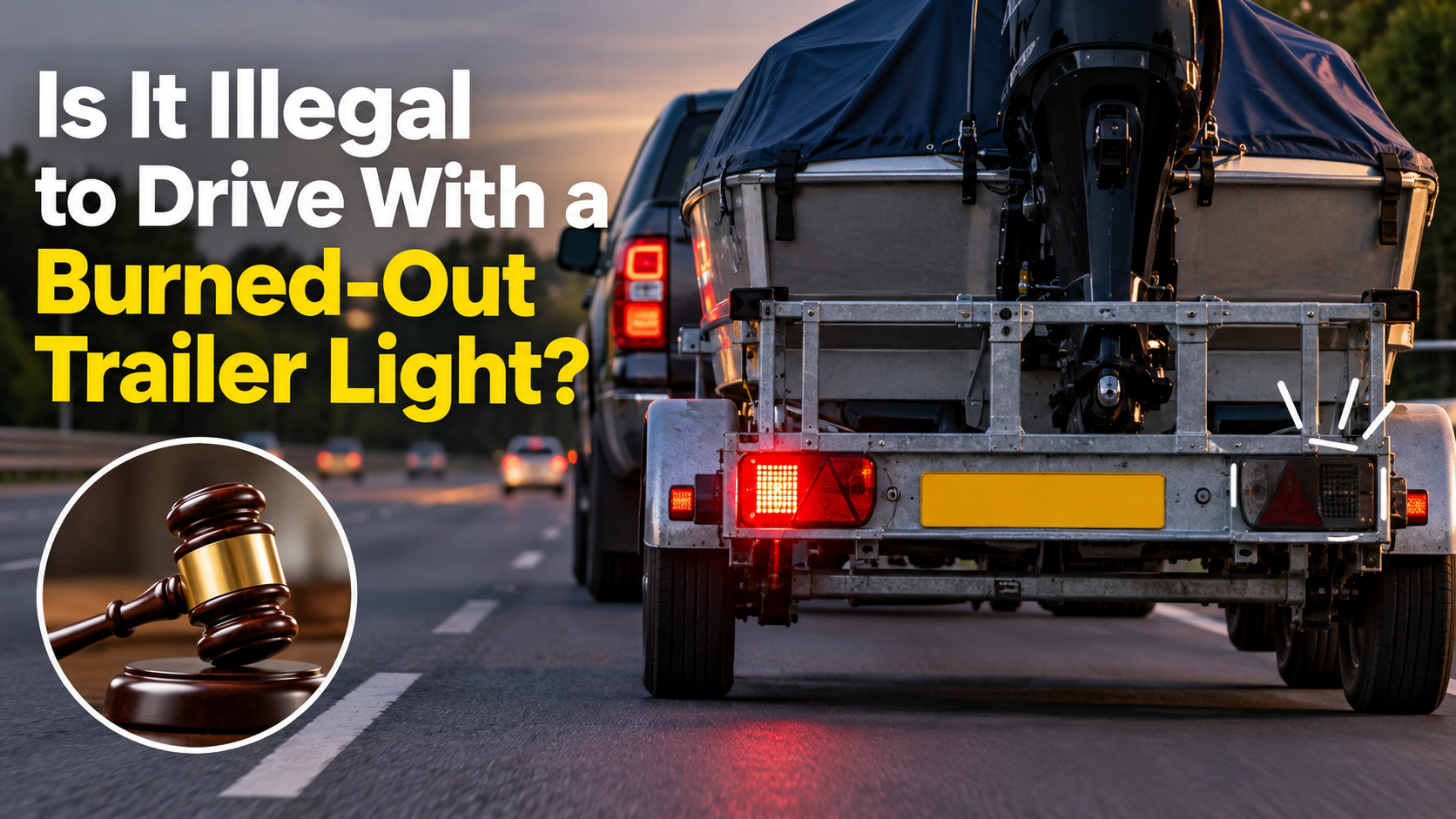
A trailer light is an easy thing to forget about until a police car's lights come on behind you, or worse, until another driver rear-ends you because your trailer never signaled it was slowing down. Is it illegal to drive with a burned-out trailer light?
Yes. Every state requires working tail, brake and turn signal lights on a trailer, and a burned-out one is an equipment violation that can lead to a stop, a citation and, after an accident, shared fault.
That is the short version, but the details matter more than the headline. What actually happens after the stop, and what a bad light can do to an accident claim, depends on your state and on whether anyone got hurt.
Why Trailer Lights Are A Legal Requirement, Not An Accessory
Federal law sets the baseline. FMVSS 108, the federal lighting standard summarized in the Code of Federal Regulations, requires manufacturers to equip trailers with tail lamps, stop lamps, turn signals and reflectors before the trailer is ever sold. Every state then has its own vehicle code requiring those lights to keep working while the trailer is on the road, which is the law an officer actually enforces during a stop.
Trailers have an extra wrinkle that cars do not. A trailer often sits directly behind the tow vehicle and blocks its tail lights, brake lights and turn signals from view. When that happens, the trailer's own lights are not a backup system. They are the only signal a following driver gets, which is part of why lawmakers treat a dead trailer light as seriously as a dead light on the vehicle itself.
Can You Actually Get Pulled Over For One Burned-Out Light?
Generally, yes. Driving with a dead tail light is illegal in all 50 states, and one consumer finance site's review of the lawnotes the same is true for a single burned-out headlight: an officer only needs reasonable suspicion of a violation to make the stop, and a dark lamp on the back of your trailer is visible evidence of one.
A small number of states write their statutes so that only one of two rear lamps has to work at any given moment, which has occasionally changed the outcome of a specific stop in court. That is a narrow exception, not the general rule, and it will not help a driver whose trailer only has one lamp per side to begin with. If you are unsure how your state's statute is worded, your state's vehicle code or a local traffic attorney is the place to check, not a general rule of thumb.
What Do The Fines And Tickets Actually Look Like?
A burned-out light is usually written up as an equipment violation rather than a moving violation, which matters for your record. According to LegalClarity's review of tail light laws, fines typically run from $25 to $150 before court fees, and many states offer a correctable or "fix-it" ticket: you repair the light within a set window, usually 14 to 30 days, show proof, and pay a smaller administrative fee instead of the full fine.
That same correctable-ticket structure is part of why these violations usually do not raise your insurance premium. InsureOne's explanation of fix-it ticketsnotes that insurers generally price risk around moving violations and at-fault accidents, so a corrected equipment violation usually will not trigger a rate increase. Miss the repair deadline, though, and the violation can escalate into something that does show up on your record.
Does A Bad Light Change Who Is At Fault In An Accident?
It can. Rear-end collisions are common to begin with. Citing NHTSA crash data, one safety-focused reviewputs rear-end crashes at roughly a quarter to a third of all collisions, which is why the lead vehicle's signal lights matter so much to how fault gets assigned afterward.
Most states use some form of comparative negligence, where fault is split by percentage between the drivers involved rather than assigned entirely to one side. A vehicle behind you that strikes your trailer is usually presumed at fault for following too closely, but a dead brake or turn signal that gave no warning can shift part of that fault back onto the trailer. A handful of states instead use contributory negligence, where any fault on your part can bar you from recovering damages at all, so the stakes of a working light vary a great deal by where the accident happens.
The simplest way to stay out of that argument is to never give an insurer or an officer the opening in the first place. A dead bulb or a cracked lens is usually a cheap, five-minute fix, and replacement lighting that meets equipment requirementscosts far less than a citation, a failed roadside stop or a disputed share of fault after a crash.
Does It Matter If You're Only Towing Within Your Own State?
Less than you might think. FMVSS 108 is a national manufacturing standard, so a trailer built for sale in the United States meets the same federal lighting baseline no matter which state it ends up in. State vehicle codes mostly overlap that baseline, adding details like exact lamp placement, side marker requirements on wider trailers, or extra reflective tape on larger loads.
The practical complication shows up when a trailer crosses state lines, which is common for boats, campers and equipment hauled on vacation or for work. A setup that passes inspection at home can run into a stricter state marker or reflector rule somewhere else on the trip. Checking the destination state's requirements before a long haul is a quick step that can save an otherwise avoidable stop.
Does A Light Violation Affect A Commercial Trailer Differently?
Yes, and more severely. A personal trailer with one dead tail light usually gets a fix-it ticket. A commercial trailer with the same defect can be placed out of service on the spot under federal motor carrier rules, which means the load does not move again until the light is repaired. Businesses that tow regularly have more reason than anyone to make lighting checks part of a routine, since a single missed lamp can cost a day's work, not just a fine.
Your Next Step Is A Two-Minute Light Check
Before your next trip, plug in the trailer, have someone stand behind it, and run through the tail lights, brake lights, both turn signals and the license plate lamp. It takes less time than reading this article, and it is the one step that keeps a minor oversight from turning into a ticket or a disputed accident claim.
Jump to
Why Trailer Lights Are A Legal Requirement, Not An Accessory
Can You Actually Get Pulled Over For One Burned-Out Light?
What Do The Fines And Tickets Actually Look Like?
Does A Bad Light Change Who Is At Fault In An Accident?
Does It Matter If You're Only Towing Within Your Own State?
Does A Light Violation Affect A Commercial Trailer Differently?
Your Next Step Is A Two-Minute Light Check

K. N.
Author
Latest Articles
Popular Articles