How Seafood Earns Certification - What Audits Really Examine
Seafood certifications often show up as logos on a box or acronyms on a spec sheet, but behind them is a far less visible reality.
Author:K. N.Feb 09, 20261K Shares125.1K Views
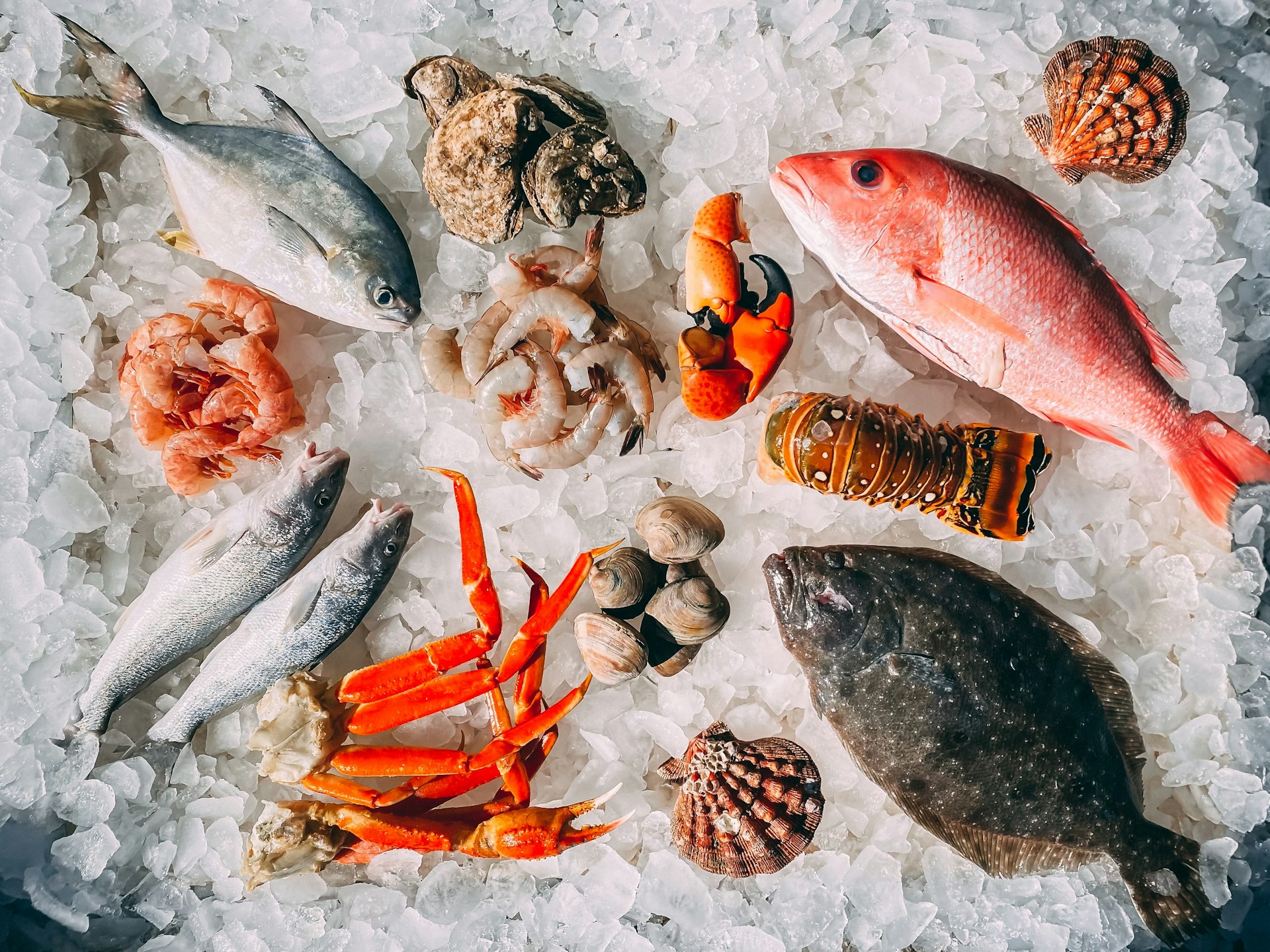
On audit morning, the plant feels the same boots on concrete, forklifts beeping, chill air curling out of a doorway. But the tempo is different. Clipboards appear. A conference room fills with binders and laptops. Someone checks that the day’s production schedule matches the day’s lot records. And then the real work begins: not “performing,” exactly, but proving that the way the facility runs on an ordinary Tuesday is the way it runs every Tuesday.
That’s the promise behind seafood certifications. Logos and acronyms are just the front door; behind them is a set of systems, traceability, sanitation, training, and supplier controls that have to hold up under independent scrutiny.
Pacific Seafood’s 2024 CSR report puts a few concrete numbers on what “audit-ready” can look like: SQF audit scores of 98% (Galveston Shrimp Company/Warrenton) and 100% (Phoenix), plus BAP audit scores of 100% (San Antonio & Portland). The report also describes routine integrity checks like regular DNA and net-weight testing, a minimum of 120 frozen receiving checks annually, and at least 12 full product inspections at distribution sites annually, all the kind of “show-me” evidence auditors love because it’s measurable and repeatable.
So what are the auditors actually looking for when seafood earns ASC, MSC, BAP, or SQF?
First: Two Different Things Get Certified
Seafood certification can mean two related but distinct categories of proof:
1) The Source Is Responsible
- MSC focuses on wild fisheries and evaluates whether a fishery is sustainable and well-managed. MSC says fisheries must meet three principles: sustainable fish stocks, minimal environmental impact, and effective management.
- ASC focuses on farmed seafood. ASC’s Farm Standard describes impact-based requirements spanning animal welfare, farm management, human rights, and environmental stewardship.
- BAP applies to the aquaculture supply chain and is built around four pillars: environmental responsibility, social accountability, food safety, and animal health & welfare.
2) The Chain Of Custody Stays Clean All The Way To The Customer
For labels to be meaningful, certified products must remain identifiable and traceable through processing, packing, storage, and distribution.
ASC is explicit that Chain of Custody certification (plus a label license agreement) is what allows the ASC label on end products, delivering traceability due diligence and reducing fraud risk. And importantly: ASC’s Chain of Custody is built on the MSC Chain of Custody Standard (with an ASC module layered on), so supply-chain companies can often manage both under a harmonized audit approach.
That distinction source certification plus chain-of-custody certification is the core logic. Auditors are checking that the story your label tells can be proven through records, controls, and day-to-day practice.
MSC: “Can This Be Traced Back To A Responsible Fishery?
At the fishery level, MSC’s benchmark is clear: the fishery must demonstrate sustainability and good governance against the three MSC principles.
But in plants and distribution centers, MSC becomes a chain-of-custody test.
MSC’s Chain of Custody Standarddefines CoC certification as assurance that products sold with MSC claims originated from a certified source and can be traced through the supply chain, with third-party audits and periodic surveillance audits over a certificate period. MSC’s own “get certified” guidance boils this down: every company that takes ownership of MSC-labeled seafood and wants to sell it as certified needs Chain of Custody certification; the standard ensures certified seafood is identifiable, segregated, and traceable.
What auditors look for in practice (MSC CoC):
- Purchasing controls: Are certified products only purchased from certified suppliers?
- Identification & segregation: Can staff physically or procedurally keep certified and non-certified products from mixing?
- Traceability and volume reconciliation: Do lot records reconcile inputs and outputs so claims match reality?
- Management systems: Are roles, training, internal checks, and corrective actions documented and consistent?
What changes inside operations to pass (the practical moves):
- Cleaner “paper-to-pallet” flow: one receiving record → one lot identity → one finished label path.
- Stronger warehouse discipline: dedicated zones or timed runs for certified product.
- Training that turns the standard into muscle memory (how you label, where you stage, what you do when something is out of spec)
ASC: “Is The Farm Responsible And Can You Prove Custody To The Consumer?”
ASC’s Farm Standardis designed to align responsible aquaculture practices across species and includes requirements across people and planet topics like human rights and environmental stewardship.
In the facility and distribution world, ASC lives through chain-of-custody rules. ASC’s CoC page is unusually plainspoken: CoC certification plus the ASC label agreement permits the ASC label on the end product and provides traceability due diligence that helps de-risk fraud.
ASC's reliance on the MSC CoC Standard is not a footnote; it's an operational advantage for companies with both wild and farmed lines, because it supports a consistent backbone for traceability and segregation.
What auditors look for (ASC CoC, via MSC CoC + ASC module):
- The same identity/segregation/traceability expectations as MSC CoC
- Any ASC module requirements for how ASC claims are controlled and labeled
Pacific Seafood’s “why this matters” angle:
Pacific Seafood emphasizes traceability and product integrity as a brand trust strategy, backed by frequent verification checks (DNA and net weight tests, receiving checks, and distribution inspections). That kind of internal discipline is exactly what makes CoC audits feel less like an event and more like a confirmation of what’s already normal.
BAP: “Is Responsibility Built Into The Whole Aquaculture Chain?”
BAP is designed as a system that can cover multiple points in the aquaculture supply chain (hatchery, farm, processor, feed mill), grounded in its four pillars: environmental responsibility, social accountability, food safety, and animal health & welfare.
For processing plants specifically, BAP uses a Seafood Processing Standard. The current core processing standard (Issue 6.0) states its objective is to specify the food-safety management and related requirements needed within a seafood processing organization to achieve certification.
What auditors look for (BAP processing):
- Food safety management systems and controls appropriate to seafood processing
- Traceability expectations that support credible sourcing claims (BAP’s broader framing includes traceability as a pillar-like requirement across the program).
- Social accountability and worker considerations as part of “responsible” practice, consistent with BAP’s published pillars.
What changes inside operations to meet BAP standards:
- Formalized supplier qualification and incoming verification to protect both safety and claim integrity.
- Stronger internal audit cadence so the plant is always “auditable,” not just on audit week.
- Documented training and accountability systems that connect food safety and worker welfare to daily routines.
Pacific Seafood, in practice:
In Pacific’s CSR reporting, the company doesn’t describe audits as “pass/fail theater.” It frames them as a driver of brand reputation and compliance and reports BAP audit scores of 100% at specific facilities.
SQF: “Do You Run A World-Class Food Safety System Documented, Trained, And Verified?”
SQF is widely used as a GFSI-benchmarked framework for food safety and quality systems. SQFI’s Food Manufacturing Code describes requirements such as:
- A designated SQF Practitioner responsible for the development and maintenance of the SQF system
- System elements, Good Manufacturing Practices (GMPs), and food safety plans
SQFI also states plainly that SQF certification is valid for one year, and sites must re-register and schedule an audit every year to remain certified.
What auditors look for (SQF):
- Evidence that the facility has implemented and maintains an SQF system (not just written it)
- Risk-based controls (HACCP-style food safety plans) and prerequisite programs (GMPs)
- Management commitment, training, recordkeeping, and corrective actions are the operational scaffolding that keep food safety consistent
Pacific Seafood’s “audit-readiness” proof points:
Pacific reports SQF audit scores of 98% and 100% at named facilities, along with a broader verification ecosystem product integrity checks, receiving checks, distribution inspections, and a sanitation program supported by 130+ sanitation team members and a structured master sanitation program.
What Changes Inside A Company When Certifications Become The Norm
Across all four schemes, the “real” operational shift is the same: certifications turn good intentions into repeatable habits.
- Traceability becomes a design principle (how lots are built, labeled, staged, and reconciled).
- Segregation becomes a physical reality (zones, time separation, label rules so claims stay true).
- Verification becomes routine (receiving checks, inspections, lab tests, evidence, not vibes).
- Training becomes infrastructure (so the standard survives turnover and growth).
- Audits become less dramatic because the system runs the same whether someone’s watching or not.
That’s the quiet beauty of a mature certification culture: the audit doesn’t “make” the plant safe or responsible. It confirms that the plant already is.
Jump to
First: Two Different Things Get Certified
MSC: “Can This Be Traced Back To A Responsible Fishery?
ASC: “Is The Farm Responsible And Can You Prove Custody To The Consumer?”
BAP: “Is Responsibility Built Into The Whole Aquaculture Chain?”
SQF: “Do You Run A World-Class Food Safety System Documented, Trained, And Verified?”
What Changes Inside A Company When Certifications Become The Norm

K. N.
Author
Latest Articles
Popular Articles