Age Of Majority By State | What The Law Says In Every U.S. Jurisdiction
The age of majority by state is one of the most misunderstood areas of state law. Many people assume every state follows the same standard but that is not always true. Knowing the correct age can help you avoid problems involving contracts, estates, or financial accounts.
Author:K. N.Aug 10, 2026546 Shares42K Views

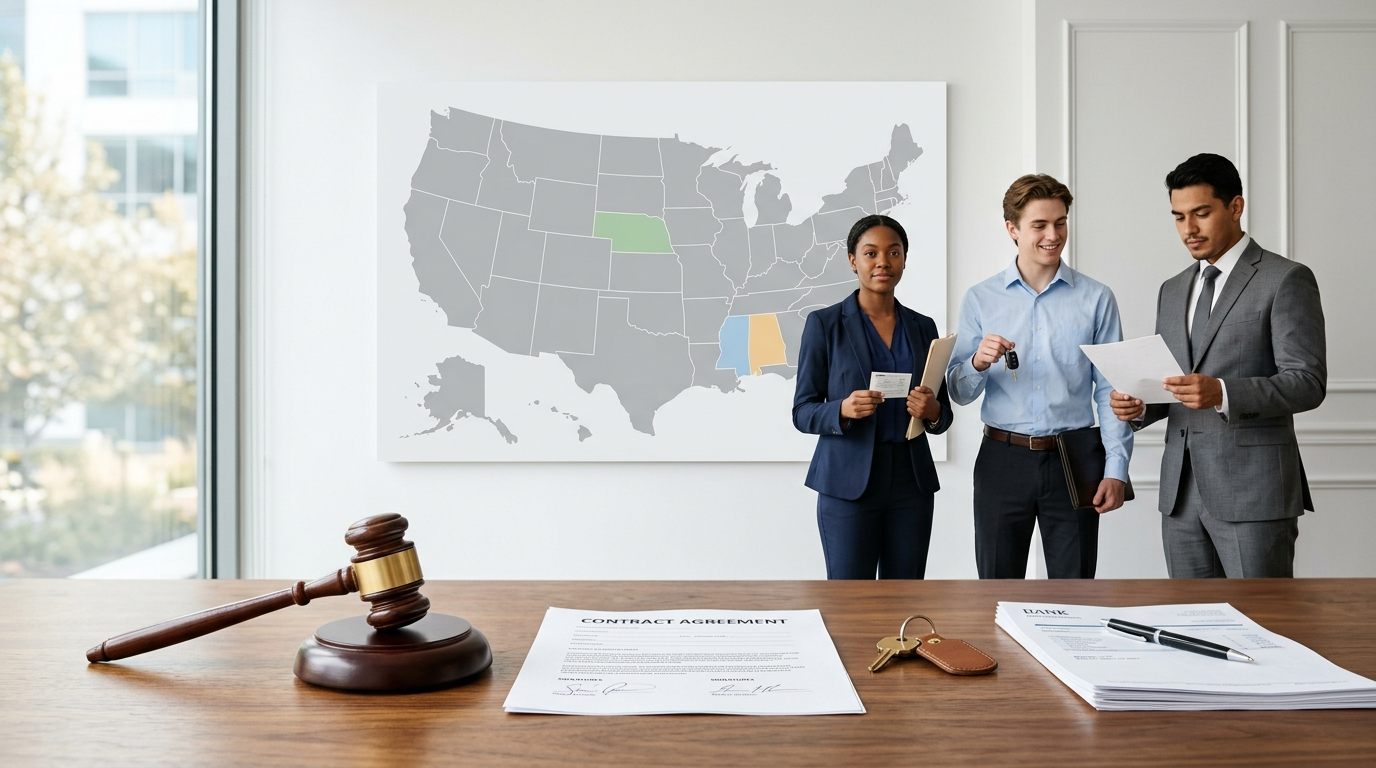
The age of majority seems straightforward until you realize it is not the same everywhere in the United States. In most states, legal adulthood begins at 18, but Alabama, Nebraska, and Mississippi follow different rules. Those differences can have real consequences when signing contracts, receiving an inheritance, opening financial accounts, making medical decisions, or taking control of property.
The confusion does not end there. The age of majority is separate from the voting age, drinking age, age of consent, and the age at which custodial UTMA accounts are transferred. Knowing how these rules work together makes it much easier to avoid costly mistakes and know exactly when full legal rights and responsibilities begin under the law.
Here is the short version before the full breakdown:
- 47 states plus Washington, D.C. set the age of majority at 18
- Alabama and Nebraska set it at 19
- Mississippi sets it at 21, which is the highest in the country
- The age of majority is not the same as the age of consent, the drinking age, the voting age, or the UTMA custodial account age
- Reaching the age of majority allows a person to sign contracts, make independent medical decisions, manage their own finances, and be held fully liable under the law
What The Age Of Majority Actually Means
Before looking at the numbers by state, it is worth being precise about what this legal threshold actually does, because "age of majority" is one of those terms that people use without always knowing exactly what it covers. If you are unsure whether you have reached the applicable threshold in your state, it can be helpful to calculate your legal agebefore handling important legal or financial matters.
The age of majority is the age at which a person is no longer classified as a minor under state law and gains the full legal rights and responsibilities of an adult. Before that age, a person is a minor, and their ability to enter into legally binding agreements, manage property, or make independent decisions in certain areas is restricted.
Once a person crosses that threshold, the legal landscape changes in several concrete ways. They can:
- Sign a contract that is legally binding and enforceable against them
- File or defend a lawsuit in their own name, without a guardian
- Make independent medical decisions, including consenting to or refusing treatment
- Manage and control their own financial accounts and assets
- Be held fully criminally responsible as an adult under state law
What makes the age of majority a state-level issue is the Tenth Amendment's reservation of police powers to the states. Congress has set specific ages for things like voting (18, via the 26th Amendment) and the legal drinking age (effectively 21, through federal highway funding requirements), but the general threshold for civil legal adulthood is left to each state legislature. The result is a national norm of 18, with three outliers that have chosen, by statute, to set a higher bar.
Age Of Majority In All 50 States
The list below groups states by their age of majority. The vast majority fall at 18. The outliers are at the top.
| State | Age of Majority |
| Mississippi | 21 |
| Alabama | 19 |
| Nebraska | 19 |
| Alaska | 18 |
| Arizona | 18 |
| Arkansas | 18 |
| California | 18 |
| Colorado | 18 |
| Connecticut | 18 |
| Delaware | 18 |
| Florida | 18 |
| Georgia | 18 |
| Hawaii | 18 |
| Idaho | 18 |
| Illinois | 18 |
| Indiana | 18 |
| Iowa | 18 |
| Kansas | 18 |
| Kentucky | 18 |
| Louisiana | 18 |
| Maine | 18 |
| Maryland | 18 |
| Massachusetts | 18 |
| Michigan | 18 |
| Minnesota | 18 |
| Missouri | 18 |
| Montana | 18 |
| Nevada | 18 |
| New Hampshire | 18 |
| New Jersey | 18 |
| New Mexico | 18 |
| New York | 18 |
| North Carolina | 18 |
| North Dakota | 18 |
| Ohio | 18 |
| Oklahoma | 18 |
| Oregon | 18 |
| Pennsylvania | 18 |
| Rhode Island | 18 |
| South Carolina | 18 |
| South Dakota | 18 |
| Tennessee | 18 |
| Texas | 18 |
| Utah | 18 |
| Vermont | 18 |
| Virginia | 18 |
| Washington | 18 |
| Washington, D.C. | 18 |
| West Virginia | 18 |
| Wisconsin | 18 |
| Wyoming | 18 |
A few states include nuanced provisions worth noting. Arkansas, Nevada, Ohio, Tennessee, Utah, Virginia, and Wisconsin have historically applied "18 or graduation from high school, whichever is later" language in limited contexts, such as compulsory school attendance or certain support orders, but their formal statutory age of majority remains 18.
Kentucky extends certain parental responsibilities to age 21 for individuals with documented disabilities. Iowa allows for adult status to be conferred earlier in specific circumstances, including when a minor is convicted and sentenced as an adult. These are exceptions to the general rule, not replacements for it.
The Three States Where The Age Of Majority Is Not 18
The outliers are not historical accidents. Each has a specific statutory basis, and understanding the reasoning matters if you are navigating a legal or financial situation in one of these states.
Alabama - Age Of Majority Is 19
Under Alabama Code § 26-1-1, the age of majority in Alabama is 19 years old. That means an 18-year-old Alabama resident is still legally a minor for purposes of contract law, property management, and other civil matters that depend on majority status.
In practical terms, this affects things like a bank requiring a co-signer on a loan, a landlord declining to enter a lease agreement with an 18-year-old without a parent's guarantee, or a court requiring a guardian ad litem for an 18-year-old plaintiff. It is not a trivial distinction for those who run into it.
Nebraska - Age Of Majority Is 19
Nebraska's age of majority is also 19, set by state statute. The same practical limitations that apply in Alabama apply in Nebraska: an 18-year-old is a legal minor for most civil purposes under state law, even though they may vote in federal elections and be subject to federal law as an adult.
Both Alabama and Nebraska sit at 19 for reasons rooted in legislative history rather than any widely-documented policy rationale. Neither state has moved to align with the national standard of 18, which has remained stable since most states lowered it from 21 in the early 1970s following the passage of the 26th Amendment.
Mississippi - Age Of Majority Is 21
Mississippi carries the highest age of majority in the United States, set at 21 by Mississippi Code Annotated § 1-3-27. This places it in line with the pre-1970s national norm that most states walked back after the voting age was lowered federally.
The historical explanation is straightforward. Before the 1970s, most states set the age of majority at 21, reflecting centuries of English common law tradition in which 21 was the threshold for full legal adulthood. When the 26th Amendment lowered the voting age to 18 in 1971, a wave of states followed by revising their age of majority statutes downward. Mississippi did not.
What this means in practice is significant. A 19-year-old in Mississippi is still a legal minor. A 20-year-old cannot independently sign a binding contract in their own name. Parents may retain certain legal responsibilities over their child until that child turns 21. For attorneys, financial advisors, and anyone entering into agreements with Mississippi residents, this distinction is not a technicality. It is the law.
One notable exception within Mississippi's own rules: courts have, in some contexts, treated 18 as a threshold for the end of parental child support obligations, creating a split between the civil minority status and specific domestic law applications.
Read Also: United States Weirdest Laws
What The Age Of Majority Does Not Determine
This is where a lot of confusion enters the picture, and it is worth being direct. The age of majority is one specific legal threshold. It does not control every age-based legal right or restriction in the United States.
Here are the five thresholds most commonly conflated with the age of majority:
- Age of consent:This governs when a person can legally consent to sexual activity. It varies by state and is most commonly set at 16 or 17. It is set entirely separately from the age of majority and is lower in most states. Anyone comparing these legal thresholds should review the current age of consent by statelaws, since they operate independently from the majority statutes.
- Legal drinking age:The minimum age to purchase or publicly consume alcohol is 21 in all 50 states. This is not set by the age of majority; it is effectively mandated at the federal level through the National Minimum Drinking Age Act of 1984, which ties highway funding to a 21-year minimum. A person in a state where the age of majority is 18 is still not legally permitted to purchase alcohol until 21.
- Voting age:The 26th Amendment to the U.S. Constitution sets the minimum voting age at 18 for all federal elections. This is a constitutional floor, not something states can lower. It is coincident with most states' age of majority, but is a separate legal instrument.
- Health insurance dependent coverage:Under the Affordable Care Act, a young adult can remain on a parent's health insurance plan until age 26. This has no connection to the age of majority and applies uniformly across all states.
- Age of emancipation:This is the minimum age at which a minor can petition a court to be granted adult legal status before reaching the age of majority. It is typically 16 and is addressed more fully in the section below.
Keeping these distinctions clear prevents real mistakes. An 18-year-old in Alabama who is told they can now "do everything as an adult" is in for a surprise if they try to independently sign a lease or manage an inherited account.
Emancipation - When Legal Adulthood Can Arrive Early
Reaching the age of majority is not the only path to legal adulthood. In every state, there is a legal mechanism called emancipation that allows a minor to petition a court for adult legal status before they reach the standard threshold.
Emancipation is a court-granted legal status in which a minor is released from the authority and custody of their parents or guardians and assumes the rights and responsibilities of an adult. Once emancipated, a minor can sign contracts, live independently, and make their own legal and medical decisions before the age of majority.
Most states require the minor to be at least 16 to file for emancipation, though some set the floor at 14. The court evaluates whether the minor is capable of managing their own affairs and whether emancipation is in their best interest. Common grounds include a minor who has married, who has joined the military, or who is financially self-supporting and living independently.
To illustrate how this plays out: imagine a 17-year-old in California who has been offered a professional contract in the entertainment industry. California's age of majority is 18. Without emancipation, a minor cannot enter a legally binding contract on their own.
Their parents or guardians must sign on their behalf, which creates complications. The minor can petition for emancipation specifically to gain the ability to manage their professional contracts and earnings independently.
Emancipation is a narrow legal tool, not a shortcut. Courts do not grant it because a teenager wants independence; they grant it when there is a genuine legal and practical need, and when the minor has demonstrated the capacity to function as an adult. It also does not override every age-based restriction: an emancipated 16-year-old still cannot legally purchase alcohol.

UTMA Account Age Of Majority By State
One of the most practically important variations on the age of majority and one that surprises a lot of families, is the UTMA custodial account age. This is different from the standard age of majority, and in most states, it is higher.
What Is A UTMA Account And Why Does Its Age Differ?
A UTMA account (Uniform Transfers to Minors Act account) is a type of custodial account that allows an adult to transfer assets to a minor beneficiary. A custodian manages the account until the minor reaches the age at which they are entitled to take control of the assets.
The critical point is that most states set the UTMA distribution age at 21, even when the standard age of majority is 18. The Uniform Transfers to Minors Act, maintained by the Uniform Law Commission, was written to give custodians a longer window to manage assets on behalf of young beneficiaries, the view being that an 18-year-old receiving a large inheritance may not be well-positioned to manage it responsibly.
Anyone establishing a custodial account should also review the applicable UTMA account rules by state, since transfer ages and account options can vary significantly. Additionally, many states allow the transferor (the person setting up the account) to elect an even higher distribution age, often up to 25, at the time the account is established.
The UGMA (Uniform Gifts to Minors Act) is an older version of this framework. Most states have replaced UGMA with UTMA, which permits a broader range of assets. South Carolina and Vermont still use UGMA for certain account types.
UTMA Age Of Majority In Every State
The following reflects the default UTMA distribution age in each state. Where states allow a higher custodian-selected age, that range is noted.
| Alabama | 21 |
| Alaska | 21 (custodian may select 18 to unlimited) |
| Arizona | 21 |
| Arkansas | 21 |
| California | 18 (custodian may select up to 25) |
| Colorado | 21 |
| Connecticut | 21 |
| Delaware | 21 |
| District of Columbia | 18 or 21 |
| Florida | 21 (custodian may select up to 25) |
| Georgia | 21 |
| Hawaii | 21 |
| Idaho | 21 |
| Illinois | 21 |
| Indiana | 21 |
| Iowa | 21 |
| Kansas | 21 |
| Kentucky | 18 |
| Louisiana | 22 |
| Maine | 18 (custodian may select up to 21) |
| Maryland | 21 |
| Massachusetts | 21 |
| Michigan | 18 (custodian may select up to 21) |
| Minnesota | 21 |
| Mississippi | 21 |
| Missouri | 21 |
| Montana | 21 |
| Nebraska | 21 |
| Nevada | 18 to 25 depending on how property was transferred |
| New Hampshire | 21 |
| New Jersey | 21 |
| New Mexico | 21 |
| New York | 21 |
| North Carolina | 21 |
| North Dakota | 21 |
| Ohio | 21 (custodian may select up to 25) |
| Oklahoma | 18 or 21 |
| Oregon | 21 (custodian may select up to 25) |
| Pennsylvania | 21 (custodian may select up to 25) |
| Rhode Island | 21 |
| South Carolina | 21 (UGMA still governs; UTMA not adopted) |
| South Dakota | 18 |
| Tennessee | 21 (custodian may select up to 25) |
| Texas | 21 |
| Utah | 21 |
| Vermont | 21 (UGMA accounts only) |
| Virginia | 18 (custodian may select up to 21 or 25) |
| Washington | 21 (custodian may select up to 25) |
| West Virginia | 21 |
| Wisconsin | 21 |
| Wyoming | 21 (custodian may select up to 30) |
Louisiana's 2023 update to age 22 is notable and easy to miss. Anyone managing a custodial account with a Louisiana beneficiary should verify whether their account predates the change or falls under the new default.
What Happens If A Minor Reaches 18 Before The UTMA Age?
This distinction often causes confusion because many people assume that turning 18 automatically gives them control over every financial asset in their name. While that is true in many legal situations, it is not always the case for custodial accounts created under the Uniform Transfers to Minors Act (UTMA).
For example, Colorado's default UTMA age is 21. A beneficiary who turns 18 is legally an adult for most purposes and can vote, sign contracts, rent an apartment, and make their own medical decisions. However, if they are the beneficiaries of a Colorado UTMA account, they still cannot take control of the assets. The designated custodian continues managing the account until the beneficiary reaches 21, when ownership transfers automatically.
During the period between ages 18 and 21, the beneficiary cannot withdraw funds, make direct investment decisions, or require the custodian to release the assets early. The custodian remains legally responsible for managing the account in the beneficiary's best interests until the transfer age established under state law.
This is why understanding your state's UTMA rules is so important before creating or receiving a custodial account. Some states, such as California, allow assets to transfer at age 18 under certain circumstances, while others use 21 as the default.
In a number of states, the person establishing the account may even have the option to delay the transfer until age 25. The choices made when the account is created ultimately determine when the beneficiary gains full control of the assets.

Practical Situations Where The Age Of Majority Matters Most
The age of majority is more than a legal definition. It directly affects when someone can sign contracts, receive inherited assets, or make financial decisions without a parent or guardian. These are some of the situations where knowing the correct age of majority can prevent costly mistakes.
Signing A Lease In Alabama At 18
An 18-year-old college student in Alabama may be ready to move into an off-campus apartment, but state law still considers them a minor because Alabama's age of majority is 19. As a result, many landlords require a parent or guardian to co-sign the lease before approving the rental. Until the student turns 19, they may not be able to enter a binding lease on their own.
Setting Up A UTMA Account In Arizona
A grandparent creating a custodial account for a grandchild in Arizona has an important decision to make. Under the state's Uniform Transfers to Minors Act (UTMA), the default age for transferring control of the account is 21.
However, Arizona law allows the person establishing the account to choose age 18 instead. Making that election when the account is created determines whether the beneficiary gains access to the funds at 18 or must wait until turning 21.
Managing An Estate In Mississippi
Estate administration can become more complex when a beneficiary has not yet reached the state's age of majority. In Mississippi, a 20-year-old inheriting money or property is still considered a legal minor because the age of majority is 21.
Rather than distributing the inheritance directly, the estate may need to transfer the assets through a guardian or another approved custodial arrangement until the beneficiary reaches legal adulthood.
Opening An Investment Account In Nebraska
An 18-year-old in Nebraska who wants to manage inherited investments independently may discover that they are not yet legally considered an adult. Since Nebraska sets the age of majority at 19, certain financial contracts and investment transactions may still require the involvement of a parent or legal guardian. Financial institutions and advisors must account for this difference before allowing the individual to take full control of their assets.
Each of these situations demonstrates why the age of majority is more than just a number. It determines when a person can act independently under state law, and because that age varies across the United States, understanding the rules in the relevant state is essential for avoiding legal and financial complications.
Frequently Asked Questions
Can A Minor Void A Contract They Signed Before Reaching The Age Of Majority?
Contracts signed by minors are considered voidable at the minor's option under most states' contract law. The minor can choose to disaffirm the contract before or shortly after reaching the age of majority.
Does The Age Of Majority Determine The Legal Gambling Age?
Gambling age is set separately by state law and varies by the type of gambling activity. Many states set casino gambling at 21, while lottery participation and some other forms may be permitted at 18.
Is The Voting Age The Same As The Age Of Majority?
They coincide in most states, but they are legally separate. The 26th Amendment to the U.S. Constitution sets the federal minimum voting age at 18 for all federal elections. Most states set their age of majority at 18 as well, but this alignment is a parallel outcome, not a legal connection.
Conclusion
The age of majority is not the same everywhere in the United States, and it is only one of several legal age thresholds that can affect your rights and responsibilities. Understanding which law applies is essential when signing contracts, managing an inheritance, opening financial accounts, or handling other important legal matters.
Because these rules vary by state and by legal situation, it is always worth verifying the current law before making significant financial or legal decisions. A quick review of your state's statutes or advice from a qualified attorney can help you avoid costly mistakes and ensure you understand exactly when full legal rights and responsibilities begin in your specific circumstances.
Don't Miss: The Role Of Judges In Shaping The Law
Jump to
What The Age Of Majority Actually Means
Age Of Majority In All 50 States
The Three States Where The Age Of Majority Is Not 18
What The Age Of Majority Does Not Determine
Emancipation - When Legal Adulthood Can Arrive Early
UTMA Account Age Of Majority By State
Practical Situations Where The Age Of Majority Matters Most
Frequently Asked Questions
Conclusion

K. N.
Author
Latest Articles
Popular Articles